The CKU standard asks for a friendly and calm dog, very devoted to its family, which enjoys working and shows courage and hardness, self-assured, fearless, adaptable and attentive to its social environment. Both aggression and excessive fearfulness are disqualifying faults. Here is what the sources describe in everyday life.
The six dominant traits#
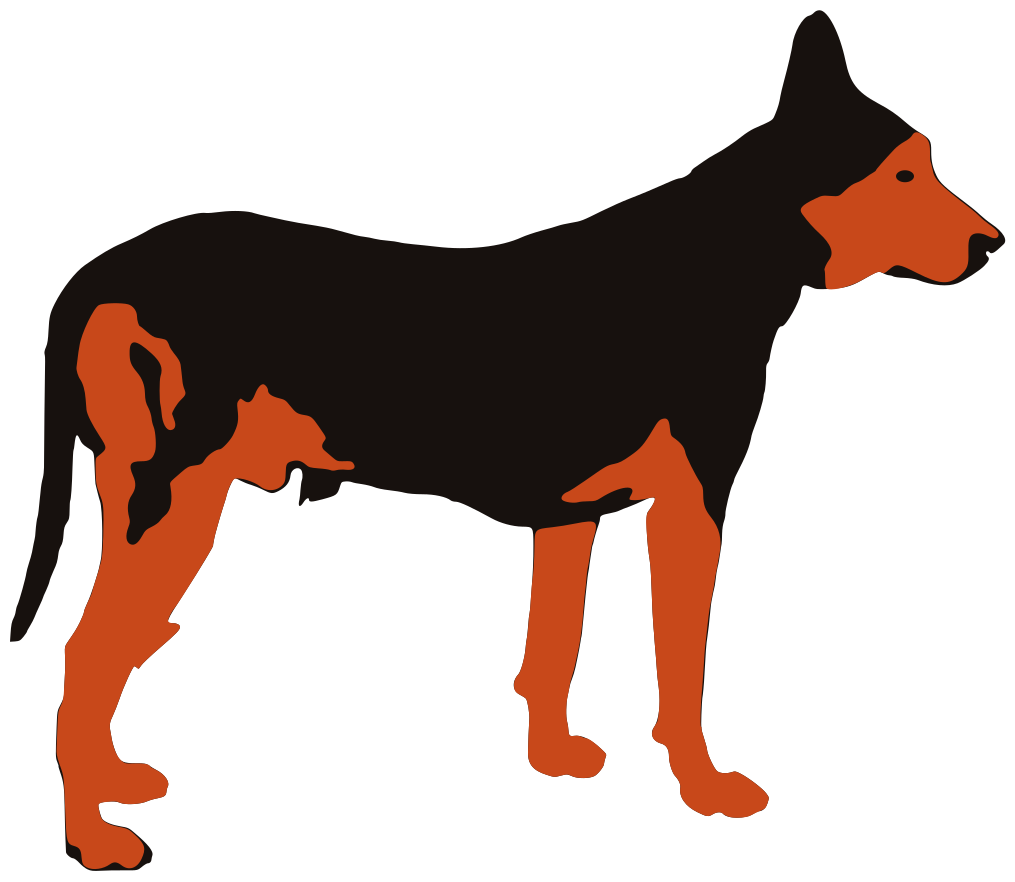
- LoyaltyAttached to the whole family
- ProtectionWarns and steps in, without aggression
- IntelligenceLearns fast, sensitive to emotions
- BalanceCalm indoors, alert outdoors
- CourageSelf-assured in the face of the unexpected
- AdaptabilityTown or country, heat or cold
- Loyalty: a very deep bond with the whole family, not just with one owner (even though some sources describe it as a "one-person dog"). It wants to be wherever its people are.
- Protective instinct: a natural guardian, alert and a strong deterrent, without needless aggression when well socialised. It barks to warn and will step in between, but it does not go looking for conflict.
- Intelligence: learns quickly and is good at problem-solving, inherited from the German Shepherd. Sensitive to human emotions.
- Emotional balance: able to tell a real threat from an everyday situation. Calm at home, watchful outside.
- Courage: fearless and self-assured in difficult situations.
- Adaptability: settles quickly into a new environment, in town or in the country, in hot or cold climates.
At home#
- A calm, settled dog indoors, not hyperactive, one that "lies down and settles" once its exercise needs have been met.
- Very affectionate, loves physical contact, seeks out sofas and closeness.
- Good with the family's children when socialised, patient and gentle, but this is a 40 to 60 kg dog: supervision is essential around toddlers, and some authors advise against it in homes with very young children.
- Can live with other dogs and animals if raised with them. It enjoys the company of other dogs. It has a prey drive (sighthound ancestry): keeping it on a lead outdoors is recommended.
- Be careful when meeting smaller dogs: Chinese texts warn that in a fight it bites hard and is slow to let go.
- A garden is no substitute for walks. Médium.cz warns that a dog left alone in the garden starts watching everything that goes by and learns that its barking "works": it ends up barking at everything.
With strangers#
- Reserved, wary, observant, but never shy. It does not greet strangers enthusiastically, but it must not attack them either.
- Territorial: it defends its home, its car and its family. A visitor accepted by the family is accepted by the dog.
- Without socialisation, this wariness can tip over into excessive guarding. This is the number one point to watch. A Chinese enthusiasts' forum observes that a dog raised shut in or on a chain, with little contact, becomes fearful, then very aggressive once it gets used to the outside world.
- According to a Chinese article, wariness of strangers appears at around 6-7 months and becomes established at around 1-2 years: this is the period when training matters most.
- Passers-by, for their part, rarely recognise the breed: owners report that their dog is often taken for a crossbreed or a Dobermann.
Warnings from Chinese sources#
Older Chinese sources (Baidu "Soviet Red Dog") paint a harsher picture. The Baidu summary calls the dog "possessive over its food, prone to aggression, very hostile to strangers" and ranks it "among the most ferocious" in the world. This wording looks like generic text that also appears for other molossers. The body of the same articles nevertheless describes the dog as "gentle" and easy to train. The harshest portrait reflects farm guard dogs that were never socialised, often kept on a chain, and the "degraded" specimens of the breed's period of decline. Modern breeding programmes (CKU, Europe, United States) select for the opposite: the CKU standard disqualifies aggression. Even so, bear in mind that the guarding potential is real and that this is not a dog for a novice or absent owner.
The Chinese authorities, for their part, class it without nuance among "ferocious" dogs (烈性犬): wherever it appears in a city regulation, it is in that category, and it never appears on a list of permitted breeds. Details of the cities concerned are on the Laizhou Hong and the law in China page.
Three common misconceptions#
| Misconception | Reality |
|---|---|
| "It's an aggressive dog" | Not by nature: it is a guardian. Aggression is a disqualifying fault in the standard. It appears through a lack of socialisation or training. |
| "Impossible in a flat" | Possible with 1 h to 1 h 30 of daily activity and mental stimulation, but a house with a securely fenced garden suits it much better. |
| "It doesn't need training, it comes naturally" | Wrong: early training and socialisation are essential for a dog of this size and temperament. |
The ideal owner#
- An active, available and consistent person or family.
- Experience with large dogs or guard dogs is desirable.
- A house with a fenced garden, or a strong commitment to exercise.
- Keen to take part in dog sports (IGP, tracking, obedience, agility): the breed excels at them.
Who it is not suited to#
- A novice owner, or one with little time or who lacks firmness.
- A very sedentary household.
- Someone who wants a dog that is friendly with everyone.